
Choosing an independent school is one of the most important decisions a family will make. It is a commitment not only to a child’s education, but to their confidence, character, friendships, opportunities and future.
At Durham Cathedral Schools Foundation, we know that families quite rightly look for evidence of value. Examination results matter, and we are proud of the outcomes our pupils achieve. But the true value of a DCSF education is broader than grades alone. It is found in the confidence pupils develop, the opportunities they embrace, the relationships they build and the values they carry with them long after they leave us.
A journey from age 3 to 18
One of the great strengths of the Foundation is continuity. Chorister School and Durham School sit together as one Foundation, offering families a coherent educational journey from the early years through to Sixth Form.
This matters. Children are known, supported and understood as they grow. Academic confidence, friendships, routines and values are able to build steadily over time. For many families, that sense of belonging and progression is one of the most reassuring aspects of a DCSF education.
The move from Chorister School to Durham School is carefully supported, helping pupils take the next step with confidence, curiosity and ambition.
Academic ambition, without losing the individual
Strong academic outcomes are an important part of our story. At Durham School, pupils continue to achieve impressive GCSE and A Level results, with recent leavers progressing to a wide range of destinations including Oxford, Durham, Exeter, Newcastle, Bath, medical schools, specialist drama colleges, overseas institutions and professional sporting routes.
What makes this especially meaningful is that success at DCSF is not built on a narrow definition of achievement. We are ambitious for every pupil, but we also recognise that young people have different talents, interests and aspirations.
Our role is to know each pupil well, to challenge them appropriately, to support them carefully and to help them find the pathway that is right for them.
Small classes, highly qualified subject specialists, close monitoring of progress, academic clinics and tailored support all contribute to a learning environment where pupils are encouraged to aim high and feel able to do so.
Breadth that helps pupils discover who they are
The value of education is also measured by the doors it opens while a child is still discovering who they are.
At DCSF, pupils are encouraged to take part, try new things and develop confidence beyond the classroom. Across the Foundation, opportunities in sport, music, drama, debating, academic societies, outdoor education, Duke of Edinburgh, trips, performances and leadership help pupils build skills that will stay with them for life.
This breadth is not an optional extra. It is central to how pupils grow in confidence, resilience, teamwork and independence.
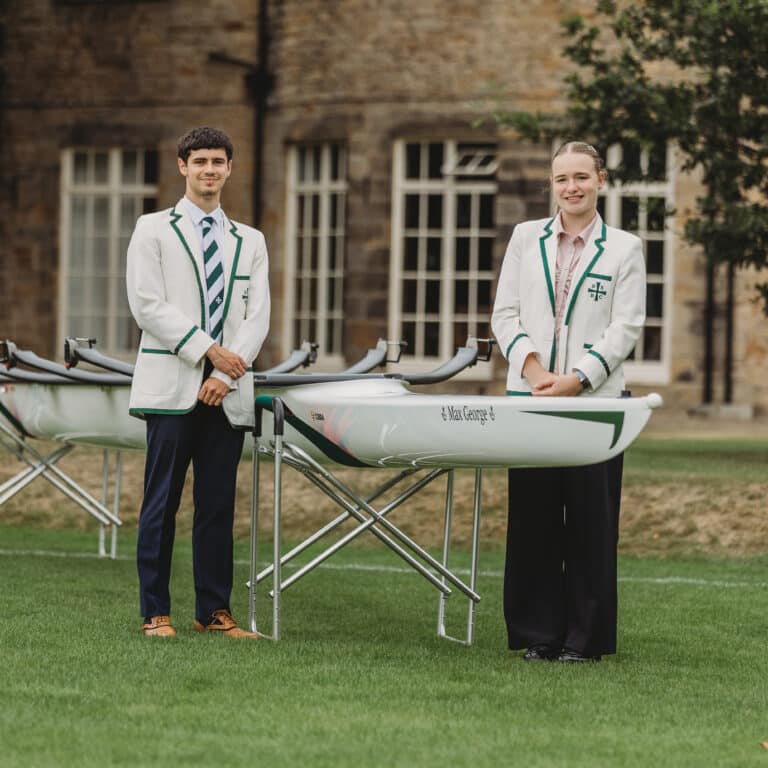
For some, that might mean rowing on the River Wear, singing in a choir, taking part in a school production, competing on the sports field, joining an academic society or discovering a new interest they had never considered before.
Music, sport and performance with real depth
Music and sport are particular strengths of the Foundation.
Our musical life is rich and varied, supported by specialist teaching, ensembles, choirs, individual lessons and performance opportunities. For choristers, there is also the extraordinary opportunity to sing as part of Durham Cathedral Choir, performing in one of Britain’s most remarkable sacred spaces.
Sport is equally central to school life. Pupils benefit from strong facilities, a proud sporting heritage and opportunities for both participation and performance. From team sport to individual development, the emphasis is on commitment, enjoyment, discipline and the confidence that comes from being part of something bigger than yourself.
Pastoral care and belonging
Academic success is only possible when pupils feel safe, known and supported. Pastoral care sits at the heart of the Foundation.
At Chorister School, children are nurtured within a warm and caring environment where wellbeing, confidence and kindness are part of daily life. At Durham School, the House system gives pupils a strong sense of belonging, with House staff, tutors and peers providing support, encouragement and guidance.
Boarding adds another dimension to this sense of community. Whether full, weekly or flexi boarding, pupils benefit from structure, independence, friendship and access to the full life of the School beyond the formal day.
Across the Foundation, our MARK values — Moral Integrity, Ambition, Responsibility and Kindness — shape the way we learn, work and grow together.
Preparing pupils for life beyond school
The value of a DCSF education becomes especially visible when pupils leave us.
Our Futures and Careers provision is designed around individual ambitions. Some pupils will move on to highly competitive universities, including Russell Group institutions and Oxbridge. Others may pursue apprenticeships, international study, professional sport, creative industries, entrepreneurship, technical pathways, employment or family businesses.
We do not believe success looks the same for every young person. What matters is that each pupil is supported to understand their strengths, explore their options and make informed, confident choices about the future.
Recent careers networking events have brought together pupils with Old Dunelmians, parents and external professionals from fields including medicine, law, engineering, finance, media, construction, education and entrepreneurship. These connections give pupils direct access to advice, role models and networks that can make a real difference.
A community that lasts
An education is more valuable when its relationships do not end at the school gate.
The Old Dunelmian network is an important part of the Foundation’s strength, connecting current pupils and families with alumni across a wide range of professions, places and pathways. These relationships support mentoring, careers insight, professional networking and a continued sense of belonging.
It is part of what makes a Durham education feel enduring.
A meaningful return
The return on a DCSF education can be seen in strong academic outcomes, excellent inspection evidence, impressive destinations and the breadth of opportunity available across the Foundation.
But it can also be seen in quieter, deeper ways: in the child who grows in confidence, the pupil who discovers a talent, the young person who learns to lead, the friendship that lasts, the courage to try, the resilience to keep going and the kindness to support others along the way.
That is the real value of a Durham Cathedral Schools Foundation education.
It is an education rooted in history, shaped by values and focused firmly on the future.
Families who would like to learn more are warmly invited to visit us, meet our pupils and staff, and experience the Foundation for themselves.