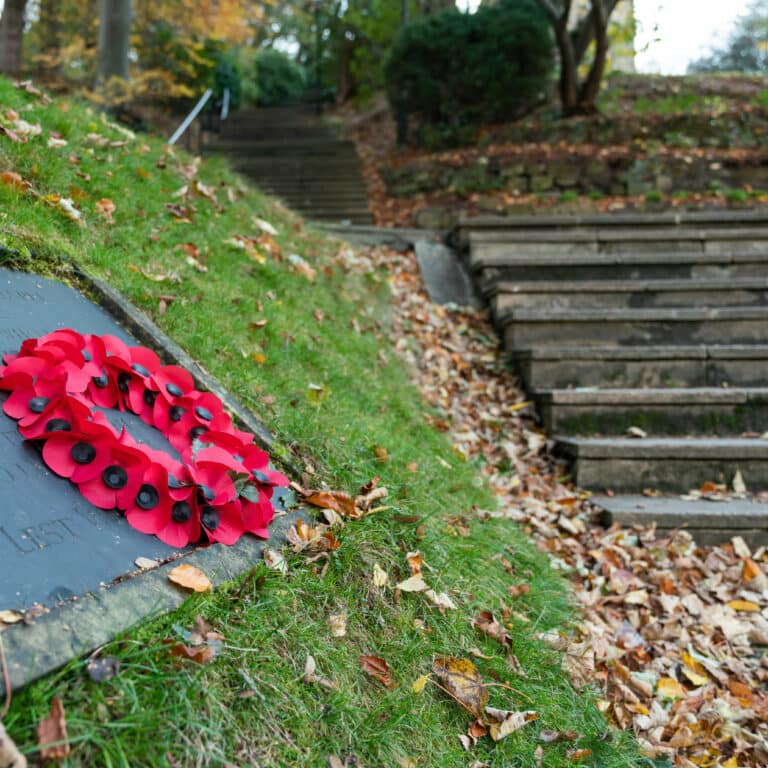
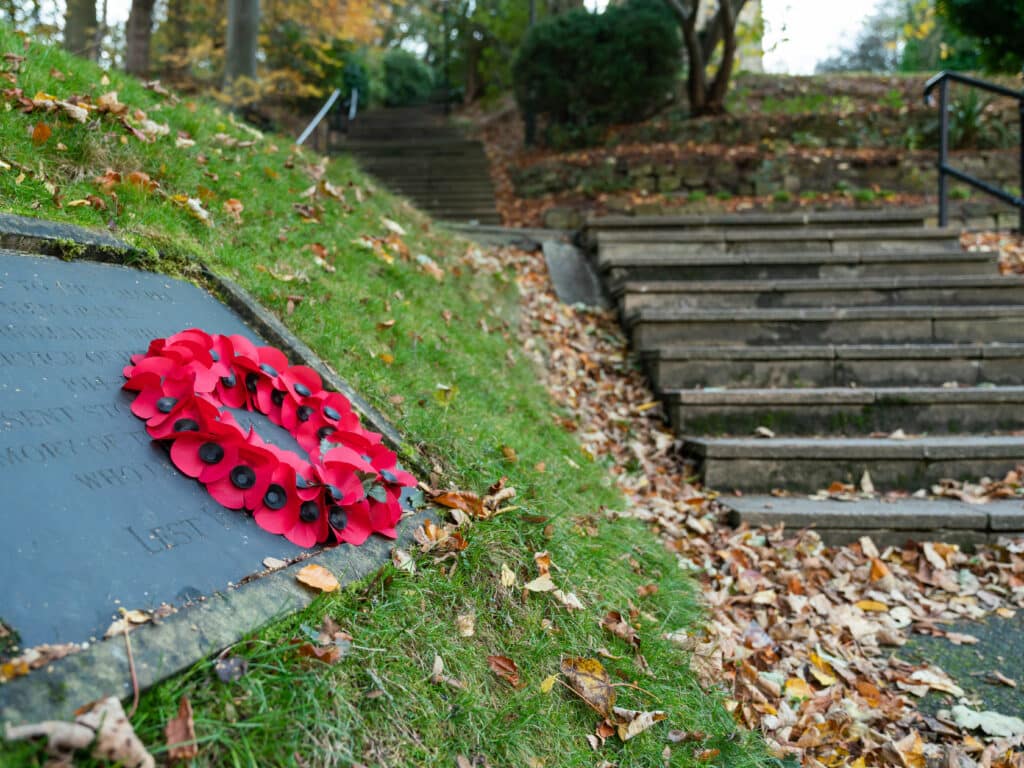
Today will see the School’s annual Remembrance Day service, which culminates in a moving visual representation of those who have lost their lives in war; as the staff and students file out, they will walk down the 98 steps from Chapel, passing pupils each holding a representation of those who died during the First World War. When the steps were laid in the 1950s the 98 steps represented the number of ODs who had died in that conflict; with the incorporation of the Bow and Chorister School, however, the number now amounts to 125. This also factors in Durham School alumni killed in the war, but not registered by contemporary record keeping. What the initial number of 98 did not consider was the invisible cost of the war. This would include individuals such as Percy Fisher Durand, a lieutenant in the 53rd Sikhs who was invalided out to Nizam College in 1917, eventually dying of his wounds in a Secunderabad Hospital in February 1937. George Shafto Legard, a captain of the Durham Light Infantry, was wounded by a shell in France and was demobilised in the Summer of 1917, where he returned to Bow School to become Headmaster there. His health deteriorated, and be 1922 he was confined to Bow School and required a wheelchair to move about. By the 24th September 1924 he passed away, another casualty of World War One. Others who died during the war not due to conflict but to illness; Norman Edgar Ritson was Captain of the S.S. Holly Branch, but wartime conditions meant that he died while his ship was moored in the port of Almera, Spain.
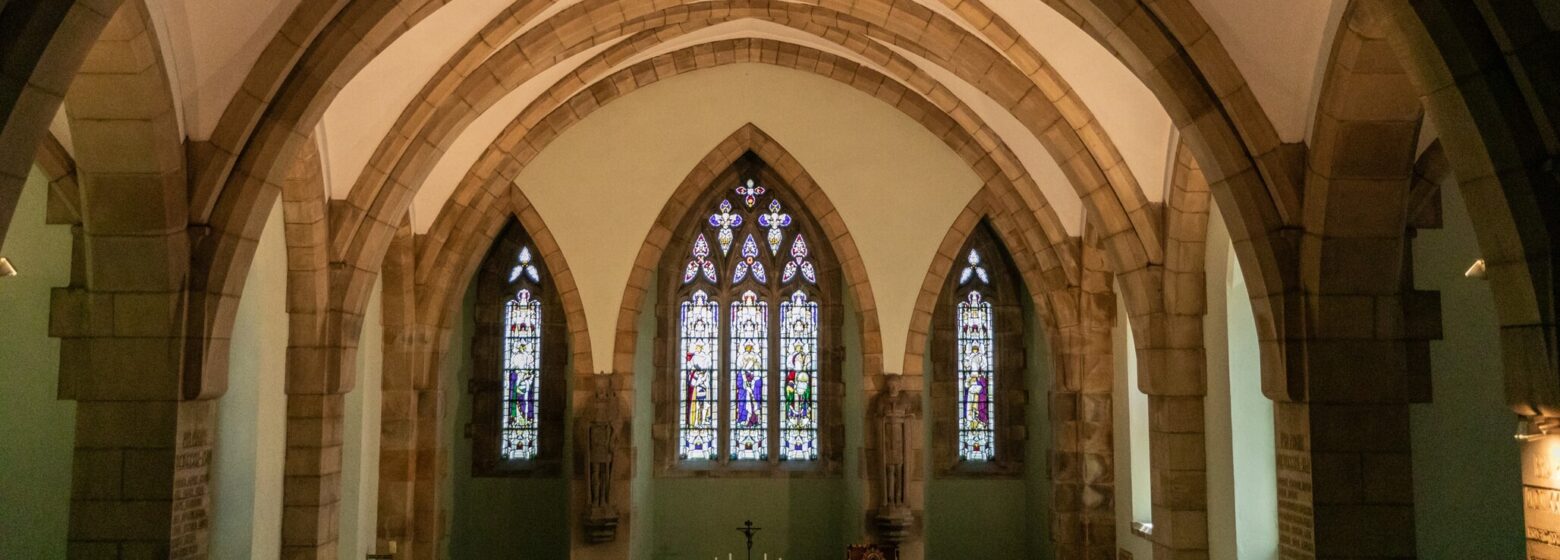
Almost all of the 125 names of those who died during the First World War have corresponding photographs, largely due to the publication in 1919 of the War Record of Old Dunelmians. Edited by Captains A. Brodrick Thompson and E. Watts Moses, the book in many ways reflected the grief of the School’s Headmaster at the time, Canon Budworth. Budworth was a Headmaster of the ‘Muscular Christianity’ school, a passionate advocate for rugby (having played for England internationally in 1890-1891) and one who maintained contact with many of his former pupils after they had left. The creation of the Chapel as a war memorial was in many ways an expression of this personal grief. The War Record of Old Dunelmians contains biographies and photographs of each of the 98 names then thought to have died in the conflict. Thanks to this, our records of all those who died in World War One are tangible and tinged with mourning.
No such record was published after the Second World War. Canon Budworth retired as Headmaster from 1932, and his successor, Canon Luce, while no less grieved by the deaths of his former pupils instead published a ‘Roll of Honour’ pamphlet in 1945. This contained the names but not the photographs of the fallen. Over the past few months, I have been trying to track down photographs of each of the 87 Old Dunelmians, Old Choristers and Old Bowites who fell during World War II so that a similar record can be formed. The task has been difficult, not only due to the logistical issues involved but also due to the emotional weight of looking at the faces and knowing that each of them went on to be Killed in Action.
In compiling these photographs, I am once more indebted to the work of Canon Budworth. In 1932, upon his departure, a large photo album was presented to Budworth, containing photographs of both the Durham School environs and the pupils. 34 of these pupils would go on to be killed in action. The photographs outline the youth of many of those who died in the conflict. Harry Waggott, shown in 1930 as a bespectacled boy who was a cadet in the Junior Division of the School’s OTC, would go on to become a Lieutenant of the DLI, killed in Action in Normandy in June 1944. Bryan Robinson is depicted quite soberly in his picture from 1927-1930, a rower in the 3rd Crew for two years in a row. He would go on to be a Pilot Officer in the RAF, part of the seven-man crew of a Handley Page Halifax Bomber which crashed in Germany in October 1941. Richard Haymes is shown in his 1928 picture as looking slightly to the side, laughing at something off-camera; he would become a lieutenant in the Gurkha Rifles, and be killed in action in Egypt in August 1941.
For the remaining photographs, many more have been found within personal and army records. Those who served in the RAF were frequently photographed, with many pictures of ‘the Few’ being available through specific Squadron archives. For the rest, I have been going through the records and photographs of the school archives, identifying those within rugby or cricketing photos who would go on to die in the War. Those such as Ian Bansall or Patrick Brown can therefore be identified in rugby strip alongside other members of the XV. I found the photograph of Charles Thomas Roderick Anderson particularly disquieting. He was stroke in the 4th crew, and can be seen towards the back of the 1939 Durham School Boat Club, somewhat reticently peeking out from behind his peers. Two years later, he would be killed in action flying over Germany, only nineteen years old. He looked painfully young.
In some cases we have not photographs but letters; for Peter Nelson, for example, there is only one photograph—depicting him in uniform and boater, walking alongside a friend—but several letters sent to his former housemaster, Ralph Le Fleming. The letters are light in tone but heavy in understatement: “On our first night here we were turned out and marched up to the square, addressed by an Officer then sent back again. This was at one o’ clock in the morning of April the first, a real April fool, for it was all done by the class immediately senior to us.” “We were all very glad when Tunis fell, I must say it was a good haul of Jerry prisoners. I should think we are more than all square on numbers now. The beer situation is not too good out here at the moment; half a bottle per man perhaps per week! A good week at the Delta would put me on the top of the world.” The final letter is from July 1944, not from Peter but from his sister:
“Dear Major Le Fleming,
I know you will all be sorry to hear that Peter was Killed in France on (or about) June 14th. We had a notice from the war office about three weeks ago to say that he was missing— This week we had a letter from his Major. I expect you would like to know the details he gave us.
‘Peter, together with five others, was sent out on a reconnaissance of a railway on June 14th. When they had not returned by 3p.m, I became very anxious + went down into their area to see if I could find them. I went in vain + could find no trace what so ever. Later that evening a sergeant + two others combed the area as far as was tactically possible at the time. We then had to presume the whole party ‘missing’.
The following two days brought us no further news, but eventually his body was found. Either a shell or a mortar had landed at his back + before he could lie down had wounded him in his head + neck he must have died instantly.
I cannot express how sorry we all are about it all, + also for you. He had such a great future ahead I’m sure’.
He added that he would let us know later where he was buried.
We are all very sad here + shall miss him terribly. Mother has taken the shock very well, considering how especially dear he was to her. I am hoping to take her away for a holiday soon.
We have had a great many visitors of all kinds to see us + they have nothing but praise for him He was here only during his holiday + leaves, but seems to have had a vast circle of acquaintances.
The grocer said to me this morning “I did like Peter – there was no old ‘side’ about him”. I think that was the secret of his charm.
We are so very glad we sent him to you – he enjoyed his time at Durham so much – + if his life was short, I think he found a great deal of happiness in it. We have a great debt to you, personally, for all that you did for him.
Would you be kind enough to tell this news to Ms. Luce – +, later, to inform us of the plans for the school war memorial?
Yours Sincerely
Ann. G. Nelson.”