British Science Week is always an exciting time at Chorister School. Our pupils and staff embrace science in all its forms throughout the year, but this annual celebration gives us the perfect opportunity to take that enthusiasm even further.
This year, our programme was so full of exciting activities that Science Week became a Science Fortnight, ensuring we had time to explore everything on offer.
Hands-On Exploration and Discovery
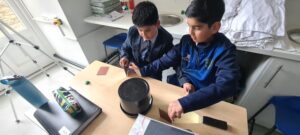
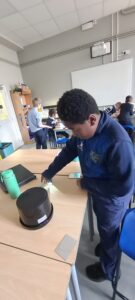
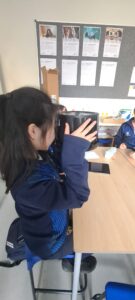
Across the two weeks, our young scientists immersed themselves in a range of hands-on investigations using our brand new light and sound equipment. Pupils explored “bear caves” in search of light sources, used mirrors to design and build their own periscopes, created music with boomwhackers, and even generated static electricity using a Van de Graaff generator.
These practical experiences allowed pupils to experiment, question and discover in a truly engaging way.
Challenging Stereotypes in Science
We also explored the Smashing Stereotypes collection, featuring over 40 inspiring stories from individuals and teams who challenge long-held assumptions about who can be a scientist. These stories encouraged our pupils to see that science is for everyone, regardless of background, and inspired many to imagine themselves as future scientists.
A particular highlight was taking part in a live lesson with astronaut Tim Peake, where pupils explored the wonders of the Moon and gained insight into life and work in space.
Curiosity in Action
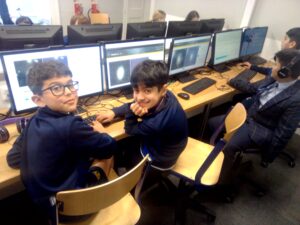
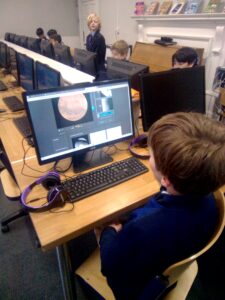
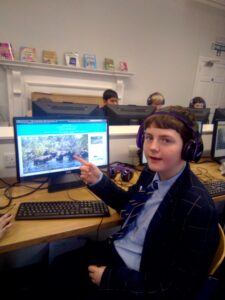
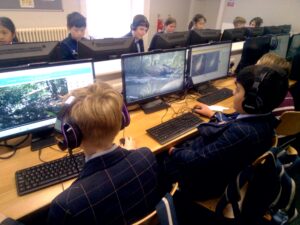
This year’s theme – Curiosity: What’s your question? – was brought to life brilliantly by our pupils. Their inquisitiveness shone through a range of real scientific research projects, including Frog Find, Dolphin Spotting, Chimp & See, and Galaxy Zoo.
Through these initiatives, pupils contributed to genuine conservation and research efforts: identifying frog species, tracking dolphin activity, observing chimpanzee behaviour, and classifying distant galaxies.
As part of Galaxy Zoo, pupils became some of the very first people in the world to study new images captured by the James Webb Space Telescope, helping scientists to deepen our understanding of the universe.
Science Meets Storytelling
We also linked Science Week with World Book Day by launching a special challenge for Year 5 and Year 6. Inspired by Jules Verne, whose imaginative ideas influenced real-world innovations such as submarines and space travel, pupils were invited to write their own science fiction stories.
Each story centred around a futuristic invention of their own design, combining creativity with scientific thinking in a truly imaginative way.
It has been a truly inspiring fortnight of curiosity, creativity and discovery – and we look forward to continuing this journey of exploration throughout the year.